

BECAUSE AIRBNB IS NOT A PARTNER IN FAIR REGULATION.
The Airbnb platform is not a partner in cleaning up the sector, ensuring that accommodations can only be sold with proper registration and tax compliance. The platform allows anyone to become a host, regardless of whether their activities are legal. Municipalities do not have a straightforward tool to check whether a property has been rented out for 60, 75, or even 130 days in a year.
Predictable and stable regulations are also important for intermediary platforms, as they are not interested in having the tensions caused by illegal rentals lead to drastic decisions that could limit or even eliminate private accommodation rentals in large cities. Airbnb has taken steps to promote transparent and straightforward cooperation with local authorities: for example, in Hungary, a NTCA number and tax identification number and/or tax number are now required for new listings on the platform.
In February 2024, the EU Parliament adopted its regulation on short-term rentals, which obligates platforms like Airbnb to collect and share data with relevant authorities and agencies, and to assist with “reasonable checks” on random information. They must also remove listings or impose penalties on hosts if their permits are suspended or revoked due to violations. Airbnb is required to provide various data to the relevant authorities at specified intervals (varying by country, usually monthly), such as the number of nights rented, the number of guests for specific bookings, revenues, etc. Once the new regulations are implemented, platforms will have 24 months to ensure that the technical conditions for these regulations are met and applied in their systems. It is clear that an EU-wide, thoughtful, transparency-promoting measure has already been implemented, so municipalities could focus their efforts on developing cooperation with the relevant authorities that allows for easy monitoring instead of imposing partial or total restrictions.
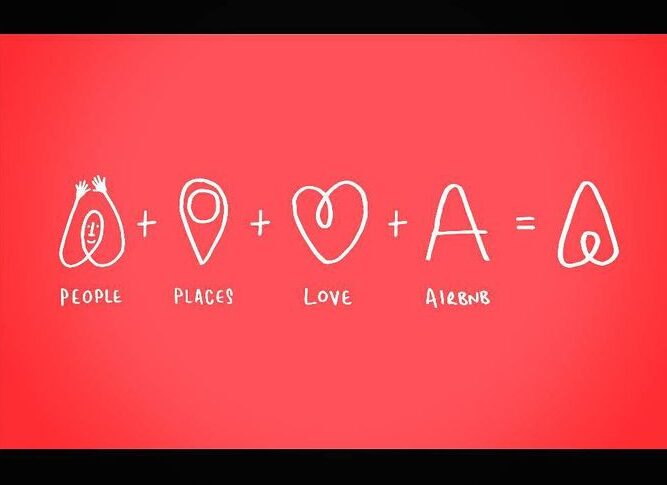
Initially, the idea was not about owners renting out empty apartments to tourists. The essence was that the owners themselves lived in the apartments, acted as hosts, and accommodated guests for short stays in the empty spaces of their homes, sharing breakfast and helping them get to know the city better during their stay. This provided not only affordable accommodation but also fostered human connections. The latter has completely disappeared over time: renting apartments to tourists has become an economic enterprise devoid of human interaction, growing into a popular/hated form of accommodation, far removed from its original purpose.
Private accommodation rental has a long history, especially in rural areas (see Lake Balaton, where this type of property rental became widespread as early as the first decade of the 20th century). Therefore, Airbnb’s innovation mainly lies in introducing a service typical of rural tourism into the inner districts of big cities. Although it was indeed a good example of shared economy in the beginning (and still partly is), like most competitive services, it is continuously evolving to meet new demands. Intermediary platforms are interested in bringing as many seekers and advertisers together as possible, but whether this takes place in a shared/private room, separate section, or entire apartment is secondary to them (in fact, the more options the user can choose from, the more bookings occur on the platform, so the platforms themselves are not interested in eliminating the sales methods more characteristic of the early period).
Even if the majority of hosts no longer live in the rented property, they still communicate with guests before and during the booking, meet them upon arrival if they wish, and see them off upon departure. It is also not necessary for this service to be considered a “human interaction-free economic enterprise,” as there are still plenty of means for valuable connections to develop between guests and hosts if there is a willingness on both sides. The range of services provided by intermediaries may expand, but it is still the participants’ attitudes that determine the conditions under which these services are created.
In the 5th district, they tried to regulate the percentage of apartments in a condominium that can be used for short-term rentals.
The aforementioned regulation – in effect since 2020 – has already passed the “trial phase.” According to §76 (4), in a mixed city center area with residential dominance, the number of private or other accommodation units within a building may not exceed 5% of the total number of independent units. This regulation has been in force for years, serving as a reasonable compromise, considering the mutual interests of the local residential community and enterprising private accommodation providers. Thanks to this regulation, even despite the central location and frequent presence of tourists, the area is less burdened with problems typically attributed to Airbnb.
BECAUSE A HOME IS NOT A HOTEL
The most important argument for prohibition is that Airbnb disturbs residential communities. In recent years, partly due to the emergence of private accommodations, a thriving “party district” has developed, primarily in Inner-Erzsébetváros, and secondly in parts of the 6th district within the Grand Boulevard, creating a nightlife that causes inconvenience for most local residents. This is largely due to street noise and littering, and to a lesser extent, loudness and partying within condominiums. However, it is important to note that 89% of Budapest’s private accommodations operate with 1 or 2 bedrooms, typically hosting 2-4 people; whereas in other types of accommodations (e.g., hostels), 8-10 person rooms are not uncommon, so it is more likely that the problems most people attribute to guests in private accommodations are actually caused by larger groups of young people traveling cheaply and in groups, who are more prone to disregard house rules, noise ordinances, and other regulations. A reasonable regulation in this context could be to cap the number of beds in private accommodations, thus reducing the chance that larger groups will disturb the peace of the residents.
BECAUSE THE PROFITS GO TO BIG INVESTORS.
We agree that this is a serious problem. In our view, the distortion of the real estate market (both in short-term and long-term rentals) is more significantly caused by large investors massively buying up apartments than by private accommodation rentals alone. It is worth distinguishing between small investors who rent out 1-2 apartments and large investors who sell (or even keep empty as investment properties) hundreds of properties; the former need more advocacy, while the latter need regulation. A reasonable solution could be to limit the number of properties that can be rented out as private accommodations per person, creating a more controllable environment and potentially helping to alleviate the housing crisis.
BECAUSE IT MAKES HOUSING MORE DIFFICULT.
Renting out apartments to tourists further deepens the housing crisis by raising rental prices, inflating property values, and pushing those seeking a real home out of the district. According to the 2022 census data from the Hungarian Central Statistical Office (KSH), 31.8% of the properties in the 6th district are uninhabited. According to the census data, these are properties where no one lives on a permanent basis. This includes private accommodations, law offices, private medical practices, occasionally used properties, etc. If we exclude private accommodations, we see that 24.2% of district apartments are empty, at least not permanently inhabited. The district, or even the city, could help alleviate the housing crisis by involving these properties, in a way that allows for the continued operation of the services provided directly and indirectly by private accommodations (e.g., restaurants, pubs, cultural centers, etc.). This could lead to a solution that does not harm a key segment of the tourism sector.
In New York, to ease the housing crisis, since September 2023, a globally strict regulation has limited private accommodation rentals: apartments can only be rented out for less than 30 days if the owner lives there (essentially, they tried to return to the shared economy concept that was the initial slogan). Unfortunately, after a year, we see that rental prices have not decreased significantly, but have rather stagnated in Manhattan and Brooklyn; the restriction on private accommodations has not brought the expected decrease in rental prices. If the currently operating private accommodation properties appeared on the long-term market, it might reduce rental prices due to oversupply, but older rental apartments would be disadvantaged because they would offer better quality. It is certain that the ban would have a significant impact on the real estate market, with potentially drastic effects.
There is no validity or effectiveness threshold.
We requested a legal opinion on the relevant point: according to the relevant law, it is quite clear that a local referendum is only valid if more than half of the eligible voters voted, and it is only effective if more than half of the valid voters gave the same answer to the formulated question; there is no exception in the law. The distributed information material is a non-binding informative material, raising the question of why there is no threshold in this case, and if indeed there isn’t (not just a typo in the material), what is its legal basis?
Anyone who has reached the age of 16 at the time of voting is eligible to vote.
It is surprising that those under 18 can also vote; only persons who have reached the age of 18 can be voters. Along with the lack of a validity and effectiveness threshold, this also raises formal questions.
Sources:
https://www.europarl.europa.eu/news/en/press-room/20240223IPR18094/new-rules-for-a-responsible-and-transparent-short-term-rental-sector
https://news.airbnb.com/airbnb-welcomes-eu-agreement-on-new-str-rules/
https://www.guestready.com/blog/eu-airbnb-law-data-sharing/
https://www.moderngeografia.eu/wp-content/uploads/2015/10/2015_III_03_bartfai.pdf
https://telex.hu/gazdasag/2023/11/02/tagesspiegel-lakasok-telkek-budapest-foghijtelek-ures-lakasok
https://nypost.com/2023/04/13/manhattan-median-rents-reach-an-all-time-high-of-4175-month/
New York City Rents Remained High As Mortgage Rates Stay Put
https://www.belvaros-lipotvaros.hu/egovernment_affairs/details/237
https://www.airdna.co/vacation-rental-data/app/hu/default/budapest/overview
No Comments